Collaborative robots — cobots — are not here to replace the operator, but to work alongside them. They take on repetitive, precise or heavy tasks while the person provides judgment and flexibility. The result is the best of both worlds.
What is a cobot?
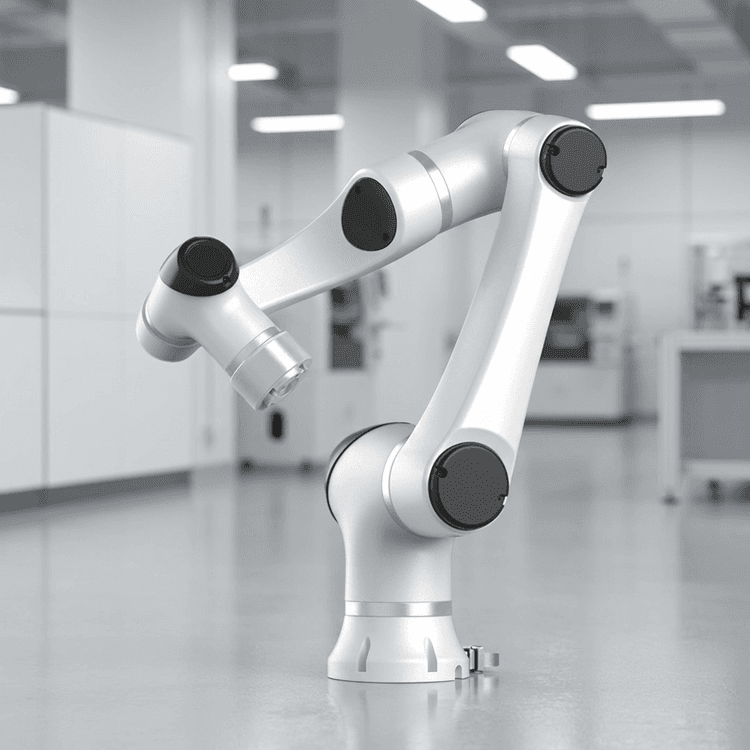
A cobot is a robot designed to operate safely next to people, without the cages traditional industrial robots require. It detects contact and limits its force and speed to share the workspace.
This lets you install it directly at an existing station and split tasks between the person and the robot based on what each one does best.
Collaboration, not replacement
The cobot handles the repetitive, the precise or the heavy: screwdriving, dispensing, pick-and-place, testing or load handling. The operator keeps the tasks that demand judgment, fine dexterity and adaptation.
This split reduces errors and fatigue and improves cycle time without losing the flexibility of a manual line.
Flexibility and fast changeover
One of the cobot's great advantages is how easily it can be reprogrammed and relocated. When a product or volume changes, the cell adapts without major works or long downtime.
Integrated with custom tooling and devices, the cobot becomes a versatile tool within the station.
Key benefits
Safe next to people
Operates without cages, limiting force and speed to share the station.
Fewer errors
Takes on repetitive, precise tasks where human error is more likely.
Shorter cycles
Balances the workload between person and robot to optimize cycle time.
Reconfigurable
Reprogrammed and relocated quickly when product or volume changes.
Applications
- Screwdriving and fastening
- Pick-and-place
- Adhesive and sealant dispensing
- Testing and verification
- Machine loading and unloading
- Assisted inspection
Frequently asked questions
Does a cobot replace the operator?+
No. The cobot assists the operator by taking on repetitive, precise or heavy tasks, while the person keeps those that require judgment and dexterity. It is collaboration, not replacement.
Does it need safety cages?+
Generally no, thanks to its force- and speed-limiting systems. The exact scope is defined with a risk assessment of the specific application.
Can it easily switch tasks?+
Yes. One of its advantages is how easily it can be reprogrammed and relocated, allowing the cell to adapt to changes in product or volume.